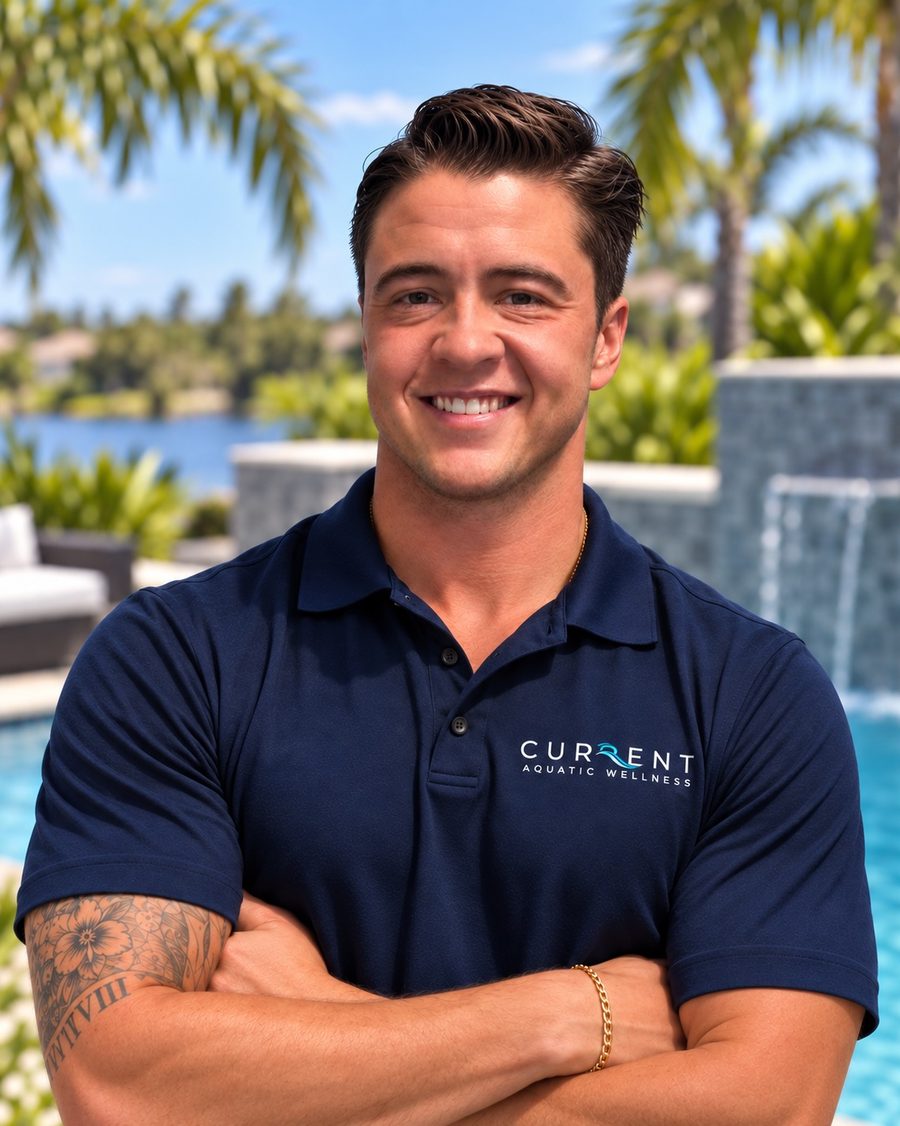
For most of my life, I lived for sports.
I became a high school national wrestling champion, a four-time Junior Olympic judo champion, competed at the 2008 U.S. Olympic Trials in judo, and spent years coaching and training athletes, including athletes who competed at the Olympic level.
For much of my life, my body was the one thing I believed I understood.
I knew how to train it.
I knew how to push it.
I knew how to make it stronger.
And then everything changed.
When the Body You've Always Relied On Changes
Years of competition came with injuries. I've undergone three shoulder surgeries involving injuries to my labrum, rotator cuff and biceps. I've dealt with significant knee injuries involving my ACL and MCL. I've broken my back.
Eventually, I sustained a spinal cord injury that fundamentally changed the way my body functions and the way I experience movement. I was left with approximately 50% sensation on one side of my body and complete foot drop. I've also dealt with arthritis and spondylosis.
For someone who had spent most of his life training and competing, that was an entirely different kind of challenge. For the first time, fitness wasn't about being No. 1. It wasn't about another championship. It wasn't about making another team.
It was about maintaining my ability to move and continuing to live independently.
I Had to Learn What Strength Really Means.
I knew how to work hard. What I eventually learned was that working harder isn't always the answer.
Sometimes you have to work differently.
I had to learn how to train the body I had now, not continually compare it with the body I had as an athlete. That journey eventually led me to training extensively in the water.
The Water Gave Me Another Way to Train.
The aquatic environment allowed me to approach movement differently. Buoyancy changed the way my body was loaded. Water resistance gave me ways to challenge strength, stability and conditioning. Movements could be adapted around limitations while still allowing me to work.
Aquatic training became an important part of my own fitness program and changed the way I thought about exercise.
My spinal cord injury didn't disappear.
My orthopedic injuries didn't disappear.
My medical conditions didn't disappear.
But I found a way to continue training my body instead of simply accepting that there was nothing more I could do with it. And that experience became more meaningful to me than any ranking or medal I'd earned.
Today, Strength Means Something Different to Me.
There was a time when strength meant winning. Today, I understand:
There may not be medals for those accomplishments. But I've learned just how important they are.
Why I Created Current Aquatic Wellness
I understand what it's like to have a body that doesn't move the way it once did. I also understand that getting older, getting hurt or developing physical limitations doesn't mean you stop challenging yourself. We simply find a smarter way forward.
Current Aquatic Wellness brings together two very different chapters of my life: the athlete who spent years learning how to make a body perform, and the injured athlete who had to learn how to make a changed body keep moving. Those experiences shaped the way I now approach training.
I don't expect you to be an athlete.
I don't expect you to move the way you did at 30.
And I'm not interested in comparing you with anyone else.
I want to know what matters to you.
I know serious training. I know what it's like when your body changes. And I'll apply both to what matters to you now.
Whatever that goal is, that's what we're training for. Because after spending much of my life chasing athletic performance, I've come to believe that one of the greatest physical accomplishments isn't standing on a podium.
My Competitive Background
At different points in my athletic career, I was ranked No. 1 nationally in judo, wrestling and sumo, and among the top three nationally in fencing. Later, coaching became a major part of my life: years of developing athletes and training alongside numerous Olympic-level competitors.
I don't share those accomplishments because I expect the people I work with to be athletes. Quite the opposite. I share them because they're the foundation of how I train: with purpose, structure and a real understanding of how bodies get stronger.
Credentials
- Certified Aquatic Fitness Professional, Aquatic Exercise Association (AEA): certified in aquatic exercise science, safety and program design.
- American Red Cross Certified: Adult & Pediatric First Aid/CPR/AED.
- Insured: Current Aquatic Wellness carries liability insurance for its training services.
- More than a decade of coaching experience, plus a lifetime of competitive athletics.
It's maintaining the strength and independence to keep living your life on your own terms.
Balance for confidence.
Mobility for freedom.
Longevity for life.